Best Food for Indoor Cats: What to Feed and Why It Matters
Indoor cats are not simply outdoor cats that happen to live inside. Their lower activity levels, reduced access to fresh prey and tendency toward dehydration all point to a diet that most standard commercial cat foods are not designed to address.

Indoor cats have specific dietary needs that differ significantly from outdoor cats.
The indoor cat population in Australia has grown significantly over the past decade, largely driven by urban living and responsible pet ownership. Keeping cats indoors protects local wildlife and extends the average cat’s lifespan, but it also creates a set of dietary challenges that are easy to overlook. An indoor cat that eats the wrong food, or the right food in the wrong amount, is at elevated risk of obesity, urinary problems and chronic dehydration, often without any obvious symptoms until a vet visit reveals a problem.
This guide covers what makes indoor cat nutrition different and what to look for when choosing a food. For a full overview of cat health beyond diet, the Mishcats cat health guide covers nutrition, warning signs and daily habits in detail.
Why Indoor Cats Have Different Nutritional Needs
An outdoor cat covers significant ground each day, hunting, patrolling and navigating varied terrain. This burns calories, stimulates the mind and keeps muscles engaged. An indoor cat, particularly one in a small apartment, may move very little between meals and sleep for the majority of the day.
This difference in energy expenditure has direct nutritional consequences. An indoor cat eating the same diet as an active outdoor cat of the same weight will almost certainly gain weight over time. Beyond calories, indoor cats are also at higher risk of urinary tract problems because they tend to drink less water than outdoor cats, who access natural water sources more readily. And because indoor cats groom more frequently without the interruption of outdoor activity, they ingest more fur, increasing the risk of hairballs.
Indoor cats burn roughly 20 to 30 percent fewer calories per day than outdoor cats of the same size and age.
What to Prioritise in an Indoor Cat’s Diet
High animal protein
Cats are obligate carnivores and cannot synthesise essential nutrients including taurine, arachidonic acid and vitamin A from plant sources. These must come from animal tissue. For indoor cats, protein quality matters even more than quantity: a diet high in animal protein preserves muscle mass during the lower-activity periods that define indoor life. Look for a named meat source as the first ingredient on any food label.
Low carbohydrates
Cats lack the enzyme pathways to efficiently convert carbohydrates into energy. Diets high in corn, rice, wheat or potato deposit excess as fat, which is a particular problem for sedentary indoor cats. Most quality wet foods and freeze-dried diets are naturally low in carbohydrates because their primary ingredient is meat.
High moisture
Indoor cats consistently underdrink. Unlike outdoor cats, they have no natural exposure to rain, puddles or prey moisture. A diet based on wet food delivers significant moisture with every meal and reduces the chronic low-level dehydration that drives urinary crystals and early kidney disease in indoor cats.
Controlled calorie density
Because indoor cats move less, their daily calorie needs are lower than outdoor cats of the same weight. A food that is calorie-dense without being nutritionally rich, which describes most grain-heavy dry foods, creates a situation where the cat reaches their calorie ceiling before meeting their nutritional needs, or exceeds it while feeling satisfied.

High-protein, low-carbohydrate food supports healthy weight and muscle mass in indoor cats.
Best Food Types for Indoor Cats
Wet food
Wet food is the single most practical dietary upgrade for most indoor cats. It provides protein, moisture and palatability in one serve, addresses the hydration deficit that dry-only diets create and is available across a wide range of proteins to allow rotation. For indoor cats prone to urinary issues, a wet-food-primary diet is often the first recommendation from vets.

High-meat, low-carbohydrate wet food. No grains, no fillers, no artificial preservatives.
Freeze-dried food
Freeze-dried food preserves the nutritional profile of raw meat without the handling and storage complexity. It is extremely palatable, low in carbohydrates and works well as a complete diet or as a meal topper added to wet food for nutritional density. For indoor cats with food sensitivities or poor coat condition, freeze-dried single-protein options are often a practical starting point for an elimination process.

100% natural, grain-free. Works as a complete diet or meal topper.
Air-dried food
Air-dried food is shelf-stable, nutrient-dense and requires no refrigeration. It is a good option for households where wet food storage is inconvenient, or as a supplement to a wet food base. Portions are small due to the low moisture content, so calorie tracking is important when introducing it to an indoor cat’s routine.

Shelf-stable, nutrient-dense. Ideal as a complete diet or added to wet food for extra nutrition.
Homemade food with a complete supplement
Some owners prefer complete control over ingredients, particularly for cats with diagnosed health conditions. Homemade cat food can be nutritionally complete when paired with a vet-formulated supplement. The Mishcats vet-approved recipe library includes recipes for healthy adult cats, kittens, cats with kidney disease and cats with food sensitivities, all formulated by Australian Board Certified Veterinary Nutritionists.
Browse Vet-Approved Cat Food RecipesWhat to Avoid in Indoor Cat Food
Reading cat food labels takes practice, but a few clear signals make poor-quality products easy to identify.
Ingredients to avoid
- Corn, wheat, soy or rice as a primary ingredient
- Generic “meat meal” or “animal by-products” without a named species
- Artificial preservatives: BHA, BHT, ethoxyquin
- Added sugars or sweeteners
- Plant-based protein isolates used to inflate the protein percentage
- Vegetable oils listed before animal fats
A food where the first three ingredients are all plant-based is not appropriate as a primary diet for a cat. The protein percentage on the label can be misleading because plant proteins such as pea protein count toward the total, even though they do not provide the amino acid profile that cats require from animal tissue.
Feeding Routine for Indoor Cats
How you feed matters as much as what you feed. Free-feeding dry food throughout the day is the most common contributor to indoor cat obesity in Australia. Most cats do not self-regulate well when food is always available, and the high calorie density of dry food makes small amounts add up quickly.
Two structured meals per day gives you accurate control over intake and makes it easy to notice appetite changes, which are often the earliest detectable sign of illness in cats. For indoor cats that eat quickly and tend toward boredom, a puzzle feeder slows down eating and provides a meaningful activity that otherwise-sedentary indoor cats rarely get.

Slows eating, stimulates natural foraging instincts. Adjustable difficulty levels.
To find the right daily amount for your specific cat based on weight, age and activity level, use the Mishcats cat food calculator below.
Calculate Your Cat’s Daily Food Amount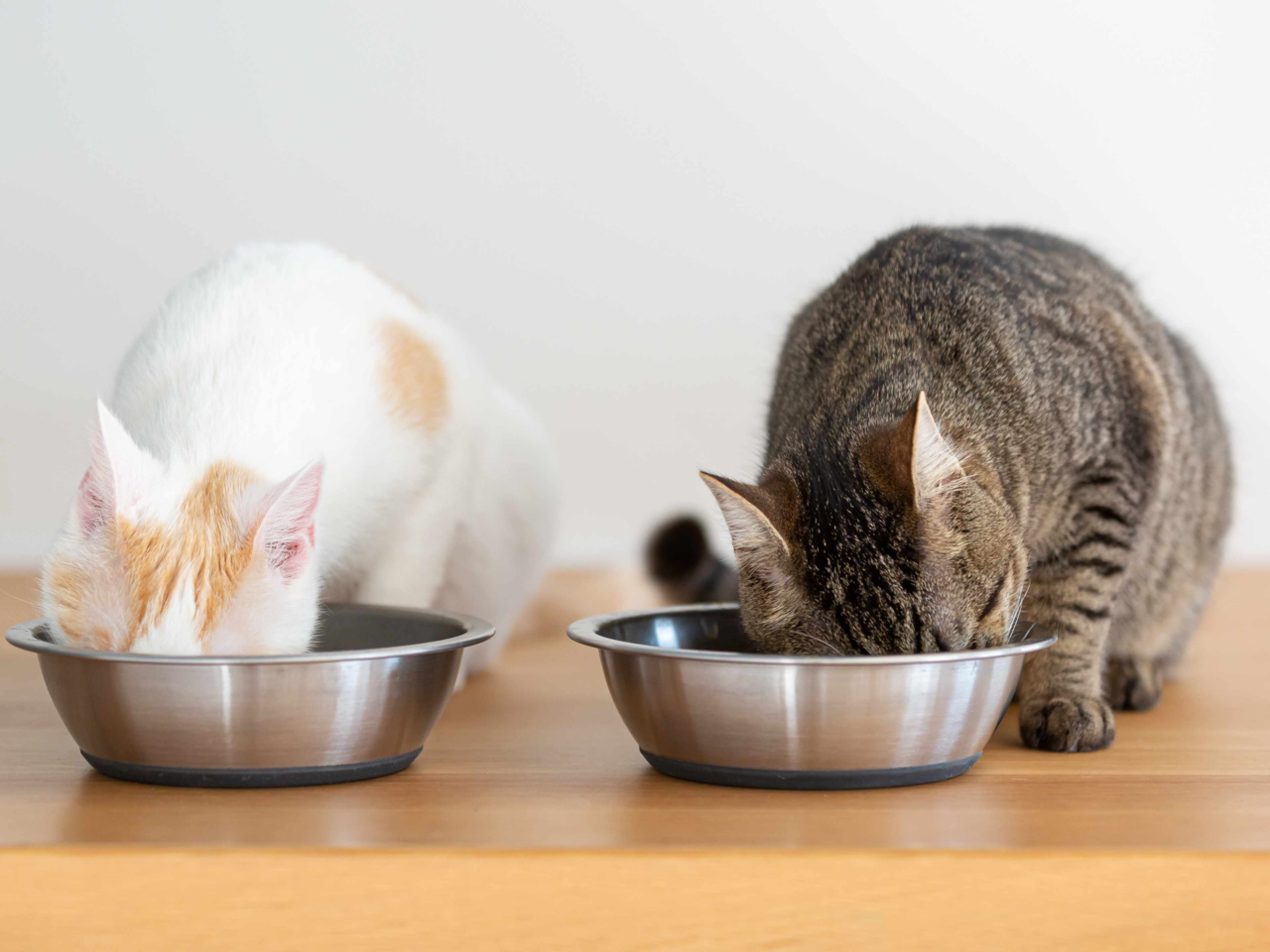
Two structured meals a day is preferable to free-feeding for indoor cats.
