
How Much Should I Feed My Cat? A Complete Feeding Guide
Portion size is one of the most common things cat owners get wrong, not through neglect, but because the answer genuinely depends on your individual cat. This guide covers everything you need to get it right.
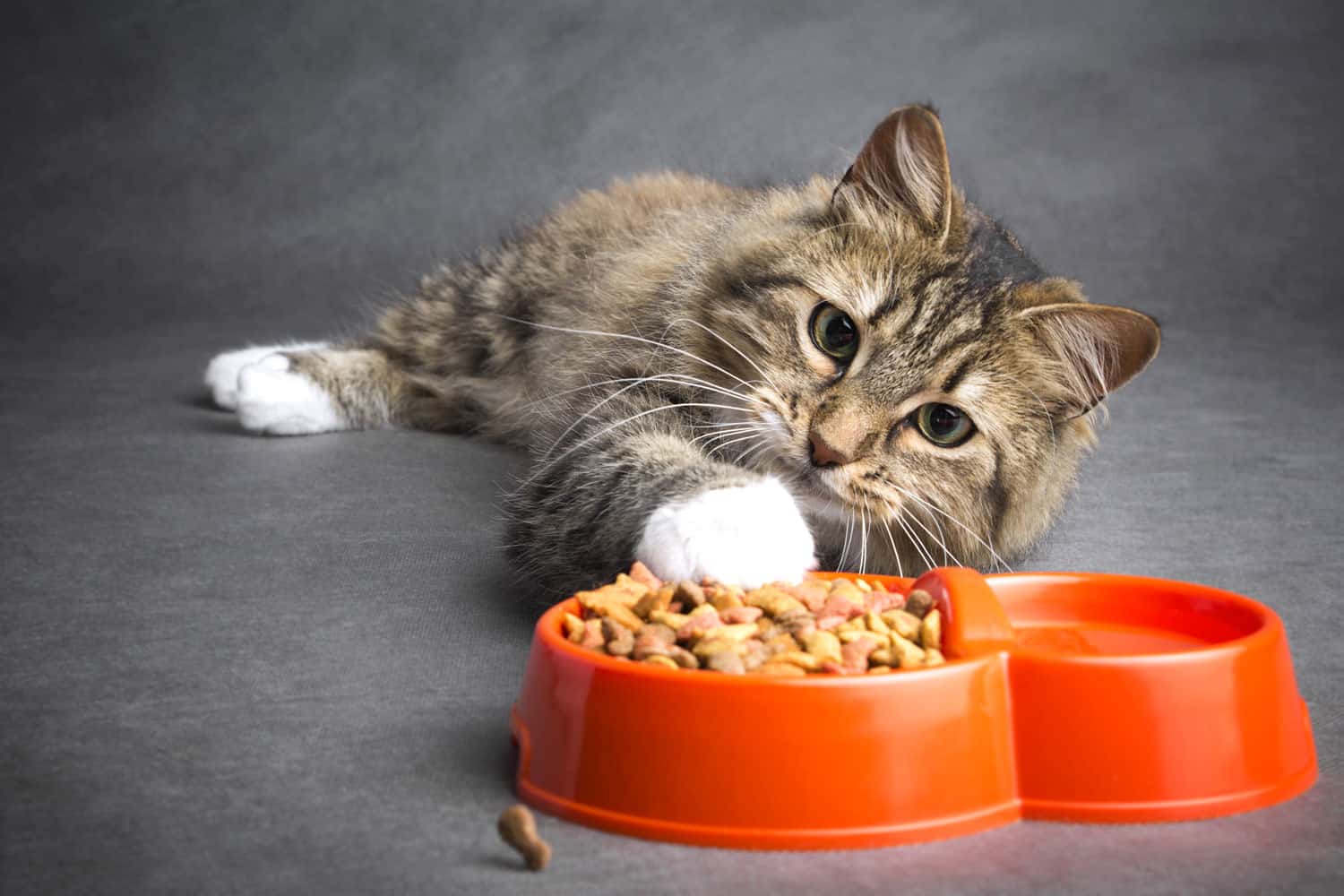
Getting portion sizes right is one of the most important things you can do for your cat’s long-term health.
More than 40 percent of domestic cats in Australia are overweight or obese, and underfeeding is a problem too, particularly in households that switch food types without adjusting quantities. The challenge is that cats vary significantly in their caloric needs based on age, weight, activity level, health status and what they are eating. A blanket “one scoop per day” rule does not account for any of that. If you are also looking at what to feed your cat, our guide on how to keep your cat healthy covers nutrition, hydration and warning signs in detail.
This guide walks through every factor that affects how much your cat should eat, with practical reference points for each life stage.
Use the Free Cat Food CalculatorWhy Portion Size Matters More Than Most Owners Realise
Cats fed too much gain weight gradually, and owners often do not notice until the excess is significant. A cat that gains just 200g above their ideal weight may not look obviously overweight, but over time even modest overfeeding compresses lifespan, strains joints and dramatically increases the risk of diabetes.
Underfeeding has its own consequences. A cat consistently underfed will lose muscle mass before fat, leading to a thin but unhealthy body composition. This is particularly common in senior cats, where muscle wasting is often mistaken for normal aging rather than a nutrition problem.
A cat that is 500g over their ideal weight is, proportionally, as overweight as a human carrying an extra 10 to 15 kilograms.
Five Factors That Determine How Much to Feed
1. Body weight
Caloric needs scale with body weight, but not linearly. Larger cats need more calories in absolute terms, but proportionally less per kilogram than smaller cats. Most feeding guides use metabolic body weight rather than actual weight, which is why a 6 kg cat does not simply eat twice as much as a 3 kg cat.
2. Life stage
Kittens require significantly more calories per kilogram of body weight than adults due to the energy demands of growth. Adult cats have relatively stable needs until around age 7, when senior-specific adjustments may be needed. Very old cats (11 and above) often need increased protein to preserve muscle mass even as overall calorie needs decrease.
3. Activity level
An active outdoor cat or a young cat that plays intensively burns considerably more energy than a calm indoor cat that sleeps most of the day. Activity level can change the daily calorie requirement by 20 to 40 percent. Most indoor cats fall into the low-to-moderate activity category.
4. Neutered or entire
Desexing reduces a cat’s resting metabolic rate by roughly 20 to 30 percent. Most cats will gain weight after neutering if their food intake is not reduced to match. This is one of the most common causes of gradual weight gain in young adult cats.
5. Food type and calorie density
This is where most owners underestimate the complexity. Freeze-dried food, wet food and air-dried food all have very different calorie densities per gram. A 100g serve of wet food may contain 80 to 100 calories, while 100g of air-dried food can contain 350 to 450 calories. Switching food types without adjusting quantities is one of the most reliable ways to accidentally over or underfeed.
Reference Feeding Amounts by Life Stage
The table below gives general daily calorie ranges as a starting point. These are estimates based on average metabolic rates and should be adjusted based on your individual cat’s body condition over time.
| Life Stage | Weight | Daily Calories (est.) | Notes |
|---|---|---|---|
| Kitten (under 6 months) | 0.5 to 2.5 kg | 200 to 300 kcal | 3 to 4 meals per day |
| Kitten (6 to 12 months) | 2 to 4 kg | 200 to 280 kcal | 2 to 3 meals per day |
| Adult, active (1 to 7 years) | 3 to 6 kg | 240 to 350 kcal | 2 meals per day |
| Adult, indoor/neutered (1 to 7 years) | 3 to 6 kg | 180 to 260 kcal | 2 meals per day |
| Senior (7 to 11 years) | 3 to 6 kg | 180 to 260 kcal | Higher protein priority |
| Geriatric (11 years and above) | 3 to 5 kg | 180 to 240 kcal | Vet monitoring recommended |
These calorie ranges need to be translated into grams based on the specific food you are using. Every quality cat food will have a calorie count listed on the packaging, usually expressed as kcal per 100g or kcal per serve.

A kitten’s calorie needs per kilogram of body weight are roughly double those of an adult cat.
How Food Type Changes the Equation
One of the most important and least discussed aspects of cat feeding is how dramatically the form of food affects the quantity required. Many owners switching from dry to wet food are surprised by how much larger the serves appear, while those switching to freeze-dried or air-dried food are equally surprised by how small the portions look. Both reactions make sense once you understand calorie density.
Wet food
Wet food typically contains 70 to 82 percent moisture, which means a large proportion of every serve is water. This is nutritionally beneficial, contributing to hydration, but it also means the calorie content per gram is relatively low. A typical quality wet food contains around 80 to 110 calories per 100g.
Freeze-dried food
Freeze-dried food has had almost all moisture removed, leaving a concentrated, nutrient-dense product. Because of this, a typical daily portion looks very small, often just a few tablespoons, but delivers the same caloric content as a much larger serve of wet food. Feeding by weight or by calorie count rather than by visual size is essential with freeze-dried food.
Air-dried food
Air-dried food sits between wet and freeze-dried in terms of moisture content and calorie density. It is shelf-stable, highly palatable and works well as a complete diet or as a topper to add nutritional density to a base of wet food. As with freeze-dried, portions are typically smaller than owners expect.
Approximate calories per 100g by food type
- Standard wet food: 80 to 110 kcal per 100g
- Premium wet food (high meat content): 100 to 140 kcal per 100g
- Air-dried food: 350 to 450 kcal per 100g
- Freeze-dried food: 380 to 500 kcal per 100g
- Standard dry food: 300 to 380 kcal per 100g
How to Adjust Portions Over Time
Feeding guides on packaging are starting points, not fixed answers. The best measure of whether your cat is eating the right amount is their body condition, not the number on the packet.
Reassess your cat’s body condition every four to six weeks. Run your hands firmly along both sides of the ribcage. In a cat at ideal weight, ribs should be clearly felt with minimal fat cover, similar to running fingers over your knuckles. The waist should be visible when viewed from above, and the belly should not hang or sway when walking.
If your cat is gaining weight on the current amount, reduce portions by 10 percent and reassess in four weeks. If they are losing weight or showing signs of hunger such as increased vocalising, persistent food-seeking behaviour or waking you earlier each morning, increase by 10 percent and monitor. Small incremental changes are more effective than large adjustments.
Feeding Cats with Health Conditions
Standard feeding guidelines apply to healthy cats. Cats with kidney disease, diabetes, food sensitivities, urinary tract problems or obesity need tailored nutrition that goes beyond general portion guidance.
For cats with kidney disease in particular, both the quantity and the composition of the diet matter significantly. Phosphorus restriction, appropriate protein levels and high moisture content all affect disease progression. The Veterinary Nutrition Group CompleteMe range, formulated by Australian Board Certified Veterinary Nutritionists, covers renal, urinary and hypoallergenic variants specifically for cats with these conditions. Vet-approved homemade recipes using these supplements are available for healthy cats, kittens, cats with kidney disease, food sensitivity and diabetes.
Browse Vet-Approved Cat Food RecipesIf your cat has a diagnosed health condition, a consultation with your vet or a veterinary nutritionist to establish specific feeding targets is strongly recommended before making dietary changes.

Cats with health conditions need feeding amounts tailored by a veterinary professional.
